A Look at the History and Tradition of Beer Steins
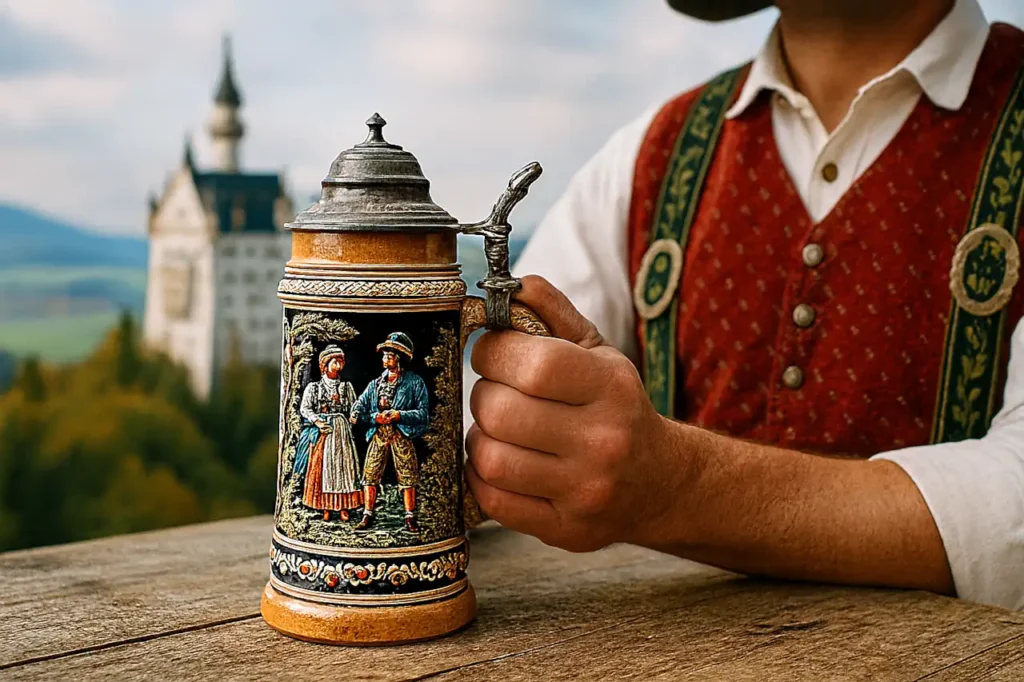
Beer steins are one of the most recognizable symbols of German beer culture. With their ornate decorations, sturdy stoneware or pewter construction, and signature hinged lids, steins have become popular collectibles and drinking vessels worldwide. But why do steins have lids in the first place? The answer lies in centuries-old history, cultural tradition, and a bit of practicality.
In this article, we’ll explore the origins of the beer stein, how the lid came about, why the tradition started, and why these lidded vessels remain beloved today.
The Origins of the Beer Stein
The term “stein” comes from the German word Steinkrug, meaning “stone jug.” In the Middle Ages, stoneware was a durable and affordable material for drinking vessels. Unlike wood, stoneware didn’t absorb liquids or odors, and unlike glass, it was less fragile. By the 14th and 15th centuries, these sturdy mugs became commonplace across German-speaking regions.
It was during this time that lids began appearing on steins. But the reason wasn’t simply decorative—it was deeply tied to public health concerns.
The Plague and Sanitation Concerns
To truly understand why beer steins have lids, we have to look back at the late Middle Ages. Europe was struck by recurring waves of plague, most famously the Black Death in the mid-1300s. This devastating pandemic heightened awareness of hygiene and public health.
By the 16th century, German sanitation laws required that food and drink containers be covered to protect against flies and other disease-carrying insects. As a result, beer mugs with hinged pewter lids emerged as a practical and lasting solution.
Thus, the lid wasn’t originally an aesthetic choice—it was an early public health measure designed to prevent contamination.
The Craftsmanship of the Lidded Stein
Once the concept of the lidded drinking vessel caught on, German artisans began refining the design. Pewter was the preferred material for lids because it was malleable, durable, and readily available. The hinged thumb-lift mechanism allowed drinkers to operate the lid with one hand, keeping the other free.
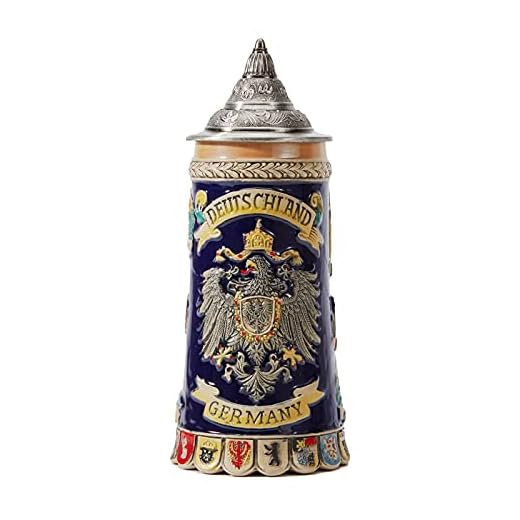
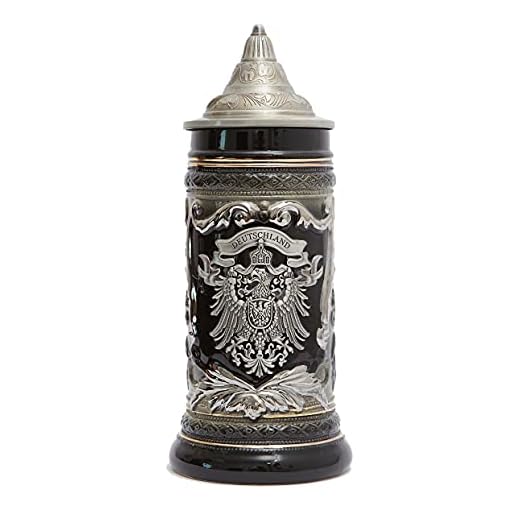
Over time, these lids became more elaborate. Some were simple flat discs, while others featured domed tops, figurines, or intricate engravings. The lid turned from a purely functional feature into a decorative one, giving each stein a unique personality.
Collectors today often prize the lid’s design as much as the body of the stein itself.

Why Steins Became Synonymous With German Beer Culture
Beer steins, complete with lids, became part of everyday life across Germany and Central Europe from the 1500s onward, and they remain closely tied to German festivals and celebrations today. They weren’t just drinking vessels; they were status symbols. The quality of the stein’s material, the detail of its decoration, and the artistry of its lid reflected the wealth and taste of its owner.
Guilds, universities, and even military regiments commissioned custom steins engraved with coats of arms, mottos, or commemorative scenes. The presence of a lid added to the sense of prestige, making the stein not only practical but also a marker of identity and tradition.
From Sanitation to Tradition
By the 18th and 19th centuries, Europe’s sanitation standards had improved, and the original health concern that created the lid requirement was no longer necessary. Yet, lidded beer steins remained popular.
Why? Because the lid had become part of tradition. It was no longer just about keeping flies out of your drink; it was about cultural identity, artistry, and continuity. Even as glassware became more common, many steins kept their pewter lids as a nod to heritage.
Why Do Beer Steins Have Lids Today?
So, in a world of modern glass pints and mass-produced mugs, why do beer steins have lids today?
- Tradition and Heritage
The lid is a direct link back to centuries of German beer culture. For collectors and enthusiasts, the lid embodies authenticity. - Decoration and Craftsmanship
Modern steins often feature beautifully designed lids, sometimes with figurines, emblems, or engraved artwork. These lids transform a simple mug into a work of art. - Practicality
While not as essential as in the plague years, lids still serve a purpose. They keep debris (or even the occasional insect) out of your beer, and they help maintain the temperature by slowing down heat exchange. - Collectible Value
For many, the lid makes the stein more desirable. A complete stein with its original lid is far more valuable than one without.
The Global Appeal of Lidded Steins
Although beer steins are most closely associated with Germany, their appeal has spread worldwide. American soldiers stationed in Europe during the World Wars brought steins home as souvenirs, and by the mid-20th century, stein collecting had become a major hobby in the United States.
Today, steins are sold not only as practical drinking vessels but also as decorative items. Oktoberfest celebrations around the world showcase the lidded stein as a symbol of German beer culture.
Are All Steins Required to Have Lids?
Interestingly, not all beer steins have lids. In fact, many modern reproductions and souvenir steins come lidless, especially those designed for casual use. But traditionally, a “true” stein is lidded. Collectors often debate the definition, but historically, the lid is what distinguishes a stein from a regular mug or tankard.
Modern Materials and Designs
While early steins were typically made of stoneware with pewter lids, today’s versions use a wide range of materials. Glass, porcelain, and even stainless steel are common. Lids may still be pewter, but some are made of other metals or alloys.
Despite the evolution in design and material, the principle remains the same: the lid marks the vessel as a beer stein in the traditional sense.
Conclusion: More Than Just a Lid
So, why do steins have lids? The answer is part history, part tradition, and part practicality. Born out of medieval Europe’s battle against plague and poor sanitation, the lidded stein became a cultural symbol of German beer drinking. Over time, the lid transitioned from a necessity to a tradition, and today it remains an iconic feature that makes beer steins unique.
For collectors, drinkers, and enthusiasts alike, the lid isn’t just a piece of metal—it’s a story. It tells us about the fears and ingenuity of the past, the artistry of craftsmen, and the enduring appeal of tradition.
So the next time you raise a lidded stein, remember: you’re not just drinking beer. You’re holding centuries of history, culture, and craftsmanship in your hand.


FAQ
Why do steins have lids?
Steins have lids because of 16th-century German sanitation laws that required drink containers to be covered to prevent contamination.
Where did beer steins with lids originate?
Lidded beer steins originated in Germany during the late Middle Ages, largely in response to public health concerns after the plague.
Are beer steins still made with lids today?
Yes, many traditional and collectible steins still include pewter lids, though modern souvenir versions may be lidless.
Do stein lids serve a purpose today?
While no longer required for hygiene, lids still keep drinks cleaner, help maintain temperature, and add to a stein’s authenticity and value.
What makes a true beer stein?
Traditionally, a true beer stein has both a decorated body and a hinged lid, which distinguishes it from a standard mug or tankard.